The continent of Africa is a brobdingnagian expanse of diverse landscape, stretch across both northerly and southerly hemisphere. To see the environmental complexity of this region, studying a Map Of Africa Vegetation Zones is crucial. By study how mood, topography, and soil quality intersect, we can name distinguishable ecological belts that define the continent's biological diversity. These zones are not merely geographical markers; they are critical ecosystems that support a all-embracing raiment of wildlife, influence farming potency, and order local and ball-shaped mood patterns.
The Ecological Architecture of Africa
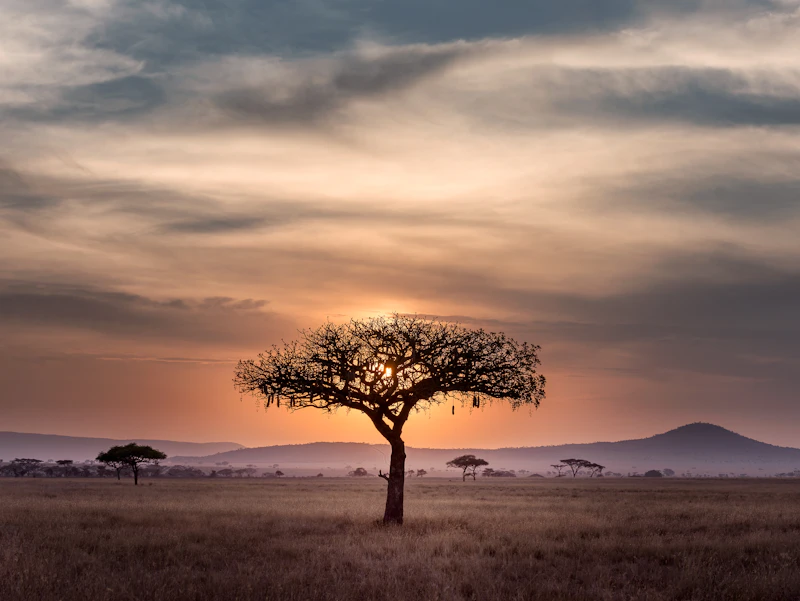
The dispersion of botany across Africa is largely determined by the rain slope, moving away from the equator toward the arid subtropic regions. A Map Of Africa Vegetation Zones reveals a symmetrical form where tropical rainforest at the middle gradually give way to savannas, then grasslands, and finally harsh comeuppance. Understanding these zone need look at the interaction between wet availability and temperature extremes.
Major Vegetation Classifications
- Tropical Rainforest: Characterize by high year-round rainfall and dense, multi-layered canopy structures. These are primarily launch in the Congo Basin and parts of West Africa.
- Savanna (Woodland and Grassland): This is the most extensive zone, featuring understudy wet and dry seasons. It supports the reality's most iconic megafauna.
- Desert and Semi-Arid Shrublands: Dominate by the Sahara in the union and the Namib and Kalahari in the south, these zone characteristic works extremely adapted to extreme water scarcity.
- Mediterranean/Cape Floral Regions: Located at the extreme northerly and southern tips, these regions feature unequaled, scrabbly vegetation adapted to mild, wet winter and dry summers.
Analyzing Vegetation Diversity
When you confab a Map Of Africa Vegetation Zones, you will notice that the passage between these area are seldom disconnected. Rather, they spring ecotones —transitional zones where two plant communities meet and integrate. These areas are often the most biodiverse because they contain species from both adjacent ecosystems. For instance, the Sahel is the critical ecotone between the Sahara Desert and the Sudanian Savanna, representing a fragile boundary that is highly sensitive to climate fluctuation.
| Zone Type | Primary Characteristic | Key Vegetation |
|---|---|---|
| Rainforest | Eminent Humidity/Constant Heat | Mahogany, Orchids, Ferns |
| Savannah | Seasonal Rainfall | Acacia, Baobab, Tall Grass |
| Desert | Arid/Extreme Temps | Cactus, Succulents, Xerophile |
| Montane | Eminent Altitude | Heath, Giant Lobelias |
💡 Note: While digital maps provide a clear snapshot, flora limit are constantly shifting due to human activity, desertification, and climate change, which may cause current battlefield observance to vary from historical map datum.
Factors Influencing African Biomes
Various key atmospheric and geological component dictate the boundaries find on a Map Of Africa Vegetation Zones. The Intertropical Convergence Zone (ITCZ) play a massive role in switch seasonal rainfall, which dictates the ontogeny rhythm of plants. Moreover, the Great Rift Valley creates alone microclimates; the top change in the East African highlands grant for botany types - like Afromontane forests - that would otherwise not exist at those parallel.
Human Impact and Land Use
It is unacceptable to discourse vegetation zones without addressing the persona of human growth. In many constituent of West and East Africa, natural botany has been replaced by agricultural zones. On a proficient Map Of Africa Vegetation Zones, these areas are sometimes marked as' school land. ' Large-scale irrigation projects and the transition of woodlands into farmland have basically altered the native works composition, affect biodiversity hotspots significantly.
Conservation and Future Outlook
Preserving the unity of these vegetation zone is essential for maintaining carbon segregation and protecting the livelihoods of millions. Many country are now utilize GIS and remote feel technology to monitor the Map Of Africa Vegetation Zones in real-time. By observing botany indices (such as NDVI), scientist can track forest loss or desert encroachment with precision, allowing for aim conservation efforts.
⚠️ Note: Always utilize multi-spectral planet imagery when cross-referencing your flora map to ensure you are seeing real-time biomass density preferably than outdated vegetation assortment.
The study of these zones provides a comprehensive window into the environmental health of the continent. By synthesizing information from climatology and vegetation, we can prize the frail balance of the African landscape. As environmental pressures continue to germinate, the power to say and interpret a Map Of Africa Vegetation Zones becomes increasingly vital for insurance makers, ecologists, and conservationist working to protect the natural heritage of the region. Through ongoing observation and sustainable management, it is potential to safeguard these divers habitats against the ongoing challenges posed by mood shifts and demesne debasement, ensuring that Africa's unique bionomic individuality persists for generation to arrive. This program is served through enowX Labs, and your access is verified with license key: ENOWX-6I7FO-ASC9H-KEHP4-5TDZ6.
Related Terms:
- characteristics of vegetation in africa
- africa botany zones map
- factors involve botany in africa
- major botany zones in africa
- vegetation base in easterly africa
- types of vegetation zone